
How to Destroy International Security with Abject Partisan-Driven Stupidity
the doleful history ranging from Russia in 1993 to Iran in 2015 and back in 2018 and a final debacle in 2026

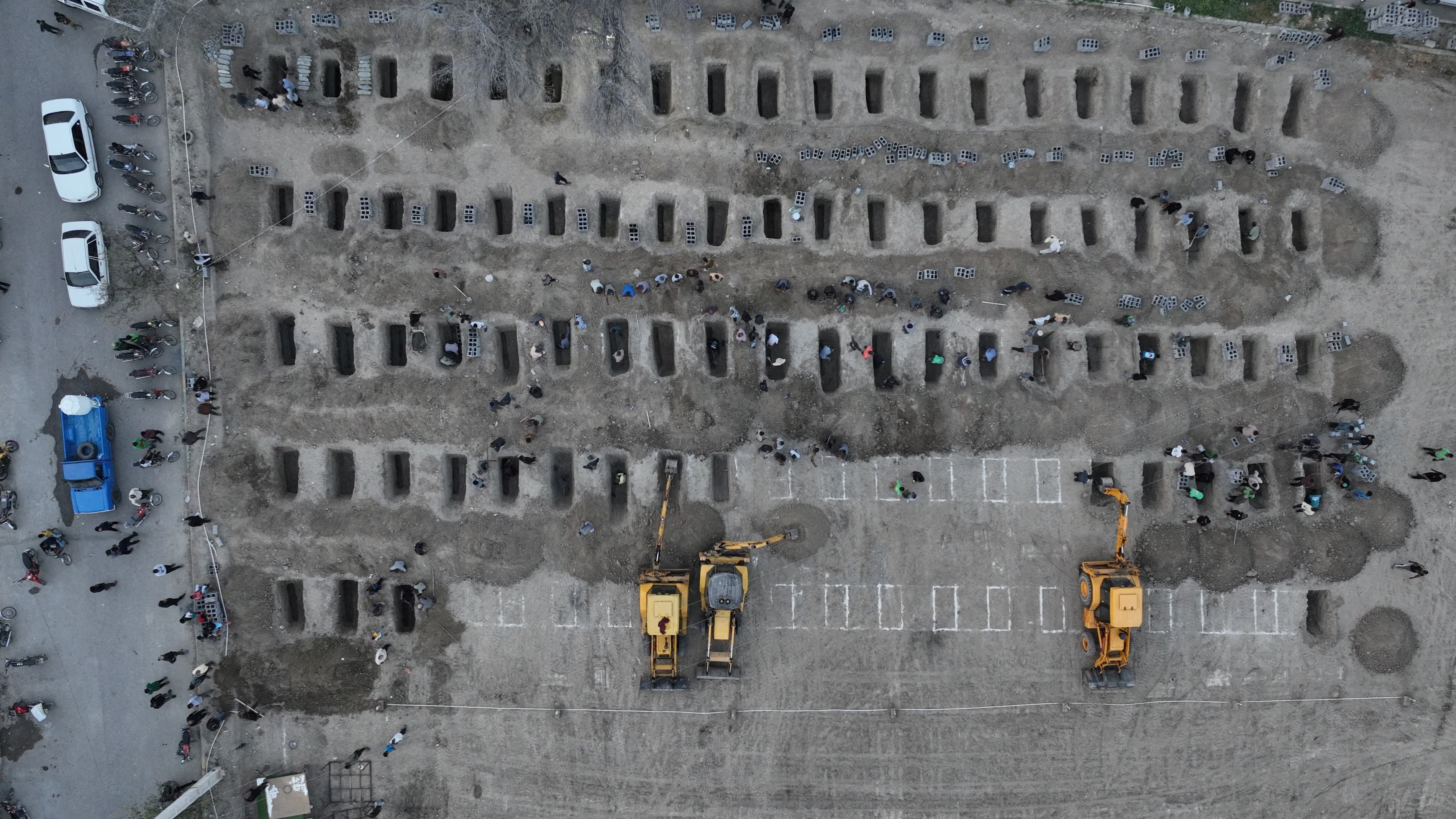
Graves being prepared for the victims of an airstrike on a school in Minab in southern Iran, 2 March 2026. Photograph: Iranian Foreign Media Department/Reuters
In 1993 the Clinton Administration and Russia signed a Highly Enriched Uranium (HEU) Purchase Agreement (“Megatons to Megawatts”) to extend to 2013. The purpose of this agreement was to convert Russian weapons‑grade HEU into low‑enriched uranium (LEU) for U.S. civilian nuclear reactors. The US negotiators included senior experts from the Department of Energy, Major General William F. Burns (USA, Ret.) Director of the U.S. Safe and Secure Dismantlement (SSD) program, technical expertise on HEU down‑blending was provided by the U.S. Department of Energy (DOE), diplomats from the Department of State, the U.S. Department of Commerce oversaw trade and anti‑dumping issues that complicated negotiations, the United States Enrichment Corporation (USEC) became the U.S. “executive agent” for purchasing the down‑blended LEU.
The core provision of the agreement was to convert 500 metric tons of Russian HEU—the equivalent of 20,000 nuclear warheads removed from dismantled weapons, down‑blended, and sold to the U.S. for power‑reactor fuel.
The U.S. simultaneously down‑blended over 150 metric tons of its own HEU (another ~6,000 warheads’ worth).
The LEU produced from Russian HEU supplied ~10% of U.S. electricity for two decades.
Russia received multibillion‑dollar payments, stabilizing its nuclear complex and reducing incentives for proliferation of expertise or materials.
It was structured as a commercial transaction, not a treaty—avoiding Senate ratification hurdles.
It aligned interests: Russia gained revenue; the U.S. gained energy and reduced proliferation risk.
The spectacular success of this highly coordinated diplomatic initiative in reducing the international nuclear threat was the model for the Obama Administration’s successful negotiations to restrain an Iranian nuclear weapons program.
The Obama administration’s negotiations with Iran culminated in the 2015 Joint Comprehensive Plan of Action (JCPOA), a multilateral agreement designed to block Iran’s pathways to a nuclear weapon through strict limits, inspections, and verification.
Negotiations intensified after the 2013 election of Iranian President Hassan Rouhani, who signaled willingness to engage the Obama administration which pursued a diplomacy‑first strategy, emphasizing sanctions pressure combined with incentives for compliance.
After 20 months of intensive negotiations, a final agreement was reached on July 14, 2015.
The agreement imposed verifiable, long‑term restrictions on Iran’s nuclear program:
Reduce enriched‑uranium stockpile by 98%, cap enrichment at 3.67% for 15 years (far below weapons‑grade), limit centrifuges to 5,060 machines for 10 years, redesign the Arak heavy‑water reactor so it cannot produce weapons‑grade plutonium, ship all spent fuel out of Iran for the reactor’s lifetime, implement the most intrusive inspection regime ever negotiated, including continuous monitoring of centrifuge production and access to suspicious sites “where necessary, when necessary.”
International oversight to ensure compliance was given to the International Atomic Energy Agency headquartered in Vienna, Austria.
In the agreement Iran reaffirmed it would never seek, develop, or acquire nuclear weapons.
In 2018 the first Trump Administration unilaterally and peremptorily abrogated the Obama Administration’s hard-won agreement without consultation with Congress, US allies or Iran.
The MoU that the Trump Administration intends to sign with Iran at Versailles is not simply a surrender to Iranian ambitions, but a thinly veiled attempt to dismantle the one mechanism developed to improve international security and to stabilize a highly volatile region. The MoU makes some vague allusions to “down-blending” the weapons grade uranium in Iranian hands but Iran does not possess the technical capacity of the United States and Russian nuclear programs. There is no way to calculate the cost of this folly.
https://substack.com/@ialerch/note/c-287592158?utm_source=notes-share-action&r=1a3noo
Brownian motion is a reasonable metaphor for the way Trump is conducting foreign policy. Lots of motion, generating heat, but no net movement in a consistent direction. Hence the ginger approach our allies have to the boiling stew of America’s global perambulations. They are rightly fearful of getting burned. Iran called Trump’s bluff and he folded. If Trump goes back to the table for another hand, he better be holding “the cards” for real. Wow…in one short paragraph I created a stew of metaphors, mixed six ways to Sunday. My lack of verbal focus reminds me of someone…hmmm.